Living hardware for real‑time atmospheric repair.
A compact photobioreactor architecture combining high-efficiency light capture, precision gas handling, closed-loop water management, and sensor‑driven AI controls—built for dense cities where every cubic metre matters.
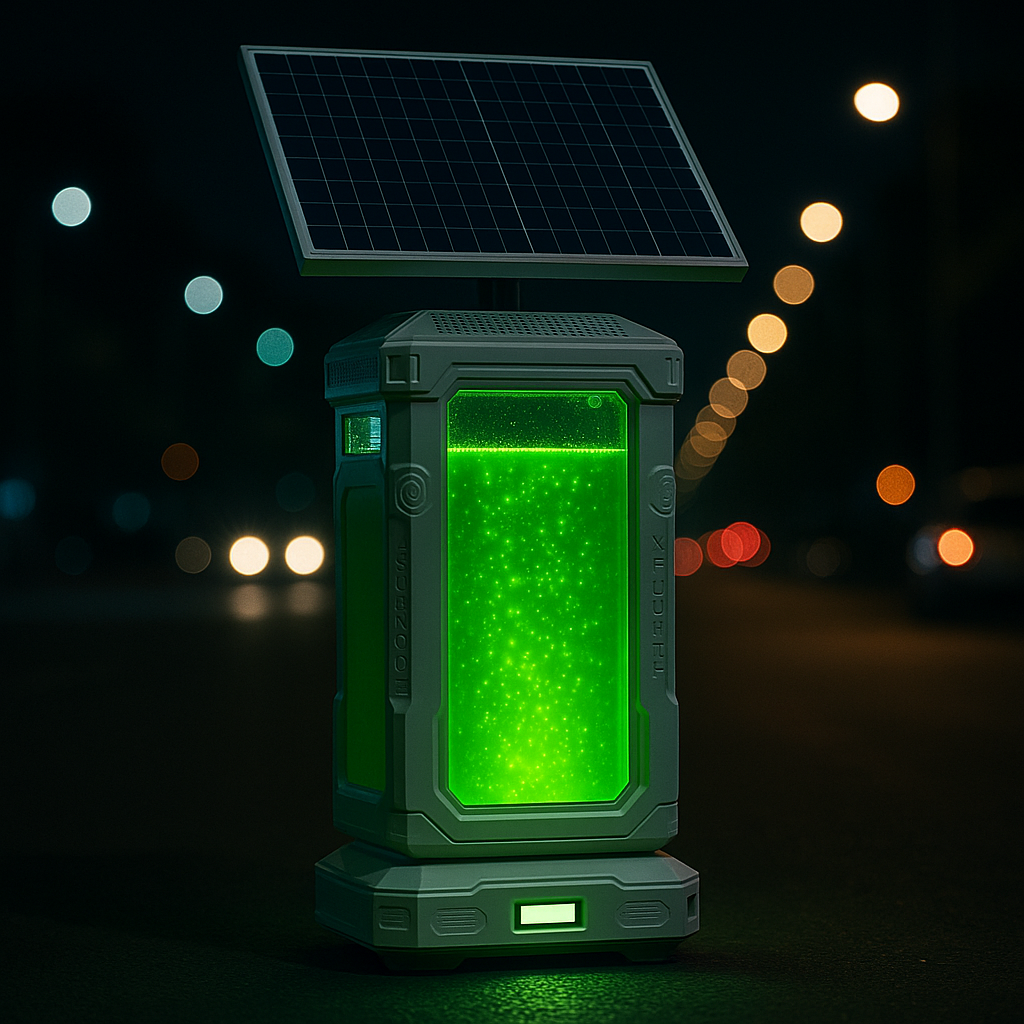
Optimized light & fluid dynamics for peak fixation.
Urban photobioreactor stack
Core Bio‑Reactor
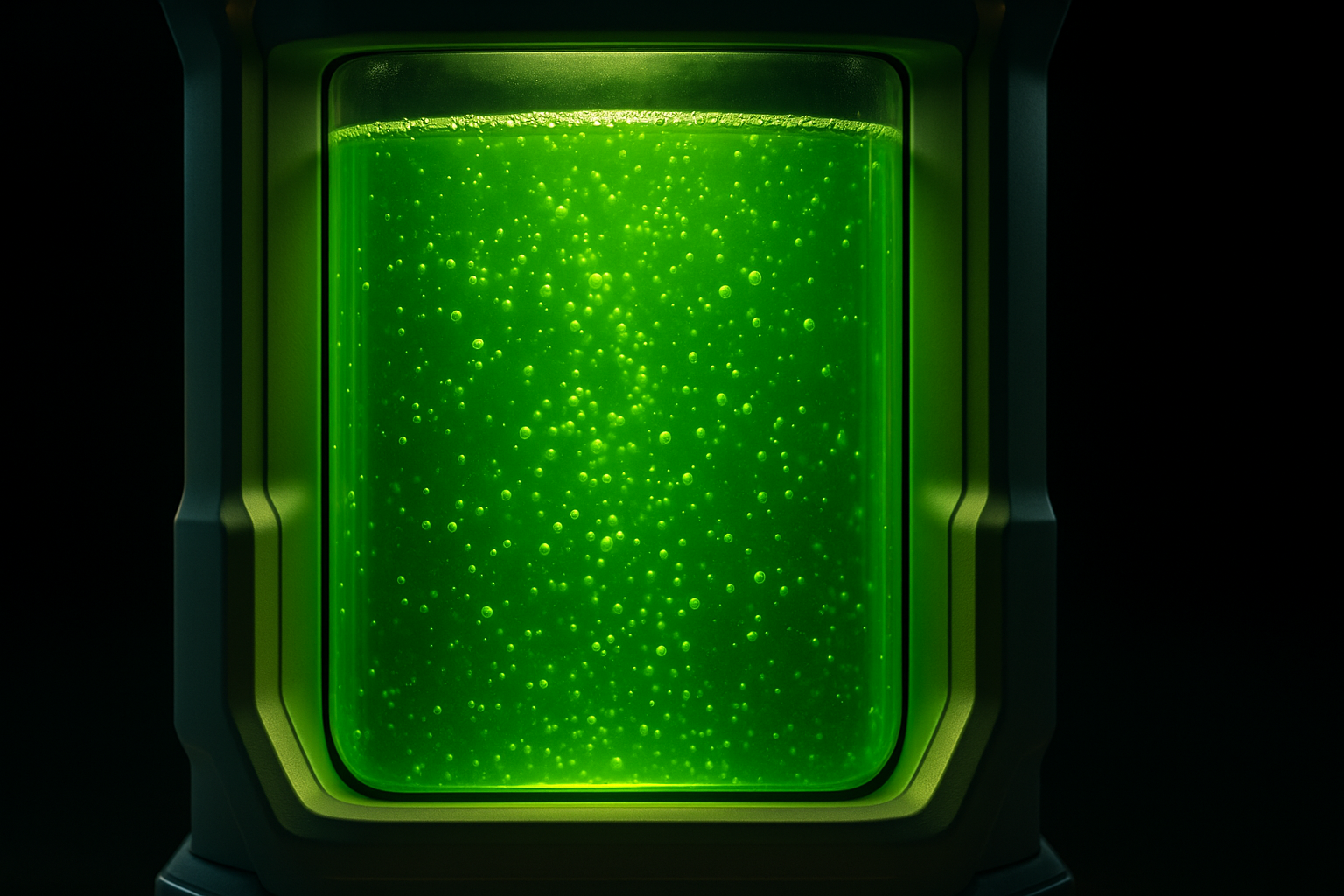
High‑density cultures (Chlorella, Scenedesmus, Coleastrella) in UV‑stable transparent chambers sustain rapid CO₂ fixation and O₂ release.
NeuroControl AI
Closed‑loop control of pH, light cycles, nutrient dosing, CO₂ dissolution, and flow regime with fail‑safe overrides and self‑diagnostics.
EnviroSense Grid
Internal: pH, DO, temp, biomass density; External: AQI, PM₂.₅/PM₁₀, humidity, temperature—streamed to dashboards in real time.
OptiLight shell + micro‑bubble gas transfer
UV‑stable acrylic + refraction panels distribute light to reduce self‑shading.
Venturi & micro‑porous injectors create fine bubbles for efficient CO₂ dissolution.
Selective coatings keep culture in optimal growth range.
Shear profiles + anti‑fouling layers preserve clarity and PAR penetration.
Light spectra tuned for microalgae
Action Spectrum
Photosynthetically active radiation (PAR) lies ~400–700 nm, with strong absorption in blue (~420–450 nm) and red (~660–700 nm). Our shell & auxiliary LEDs bias those bands for productivity when ambient light is poor.
Even Light Field
Refraction panels and controlled turbulation keep cells cycling through light/dark phases, sustaining high growth without photoinhibition.
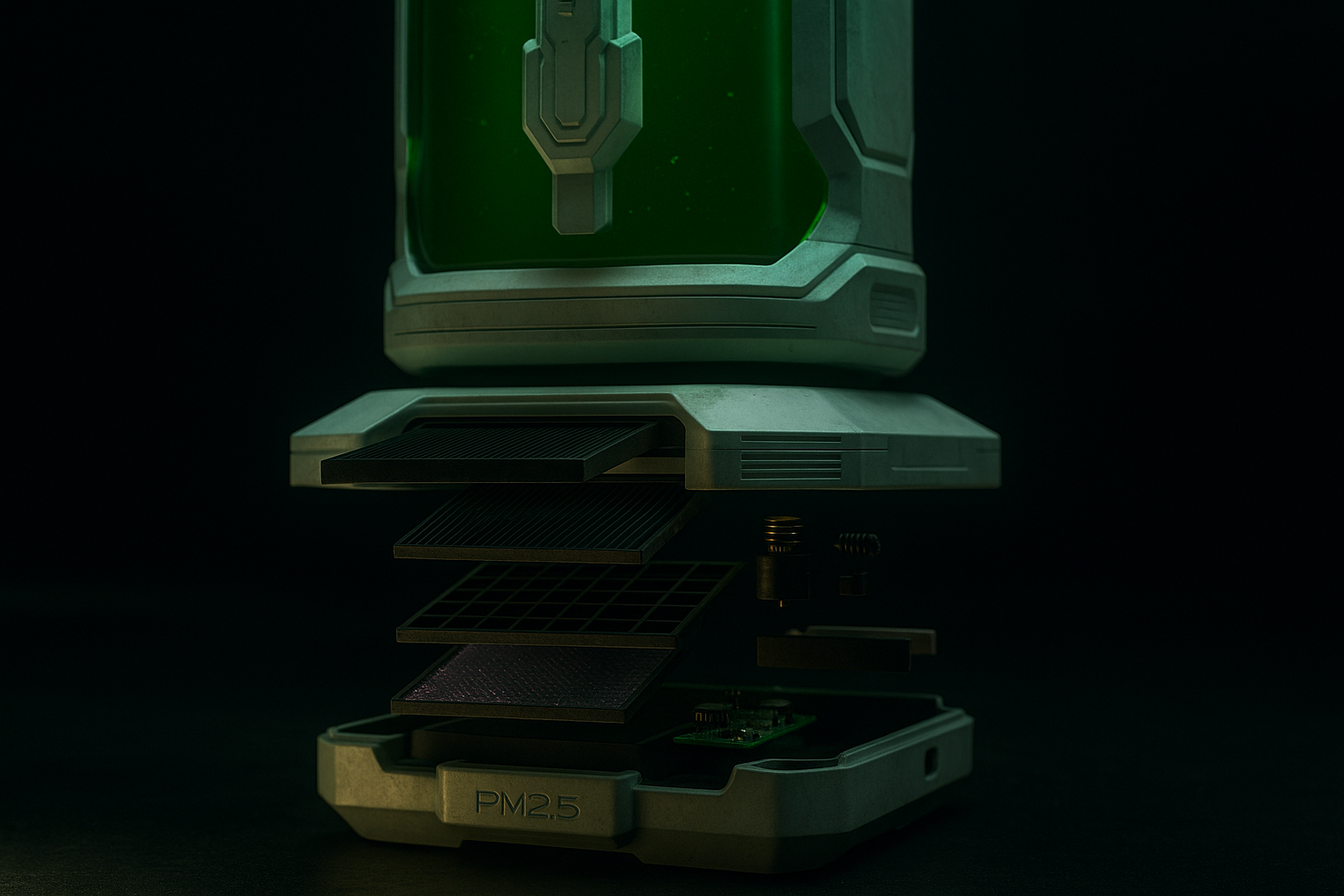
Air pathway with medical‑grade filtration
Atmospheric Intake
Calculated flow rates pull local air through pre‑mesh, HEPA, and activated carbon before contact with the bio‑reactor—capturing PM₂.₅/PM₁₀ and chemical pollutants.
HEPA Capture
True HEPA standards remove ≥99.97% of particles at 0.3 µm (U.S. DOE); EU HEPA is ≥99.95%—targeting the most penetrating particle size (MPPS).
Minimal water use, zero liquid discharge
Resource Management
- Micro‑pump circulation network ensures even nutrient delivery.
- Condensation recovery lines recapture evaporated moisture.
- pH & EC monitoring nodes maintain biochemical balance.
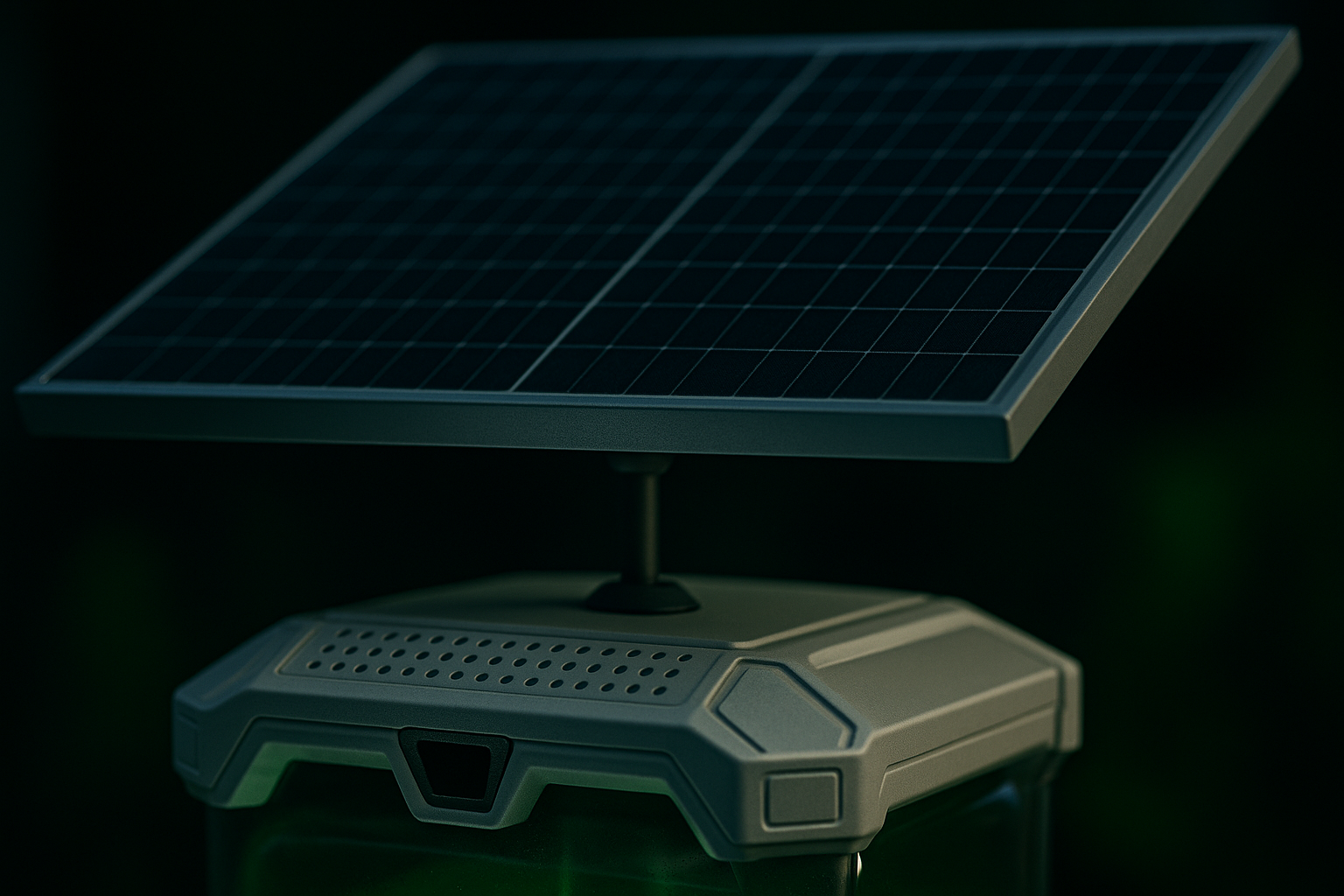
Solar + wind hybrid with smart storage
*Varies by insolation, pump duty cycle, and light supplementation.
Adaptive controls with scientific fidelity
Sensor Suite
Optical dissolved oxygen (0–20 mg/L typical), thermistors, pH/EC, CO₂ uptake via gas balance, turbidity/optical density for biomass—paired with external AQI & particulate sensors.
Live Readout (Simulated)
AI tunes light cycles + gas transfer to keep metrics within yield‑optimized bands.
From fixation stoichiometry to real‑world capture
*Theoretical stoichiometry; field values depend on light, mass transfer & culture state.
Inside the Algaetree™ system
Inside the AlgaeTree